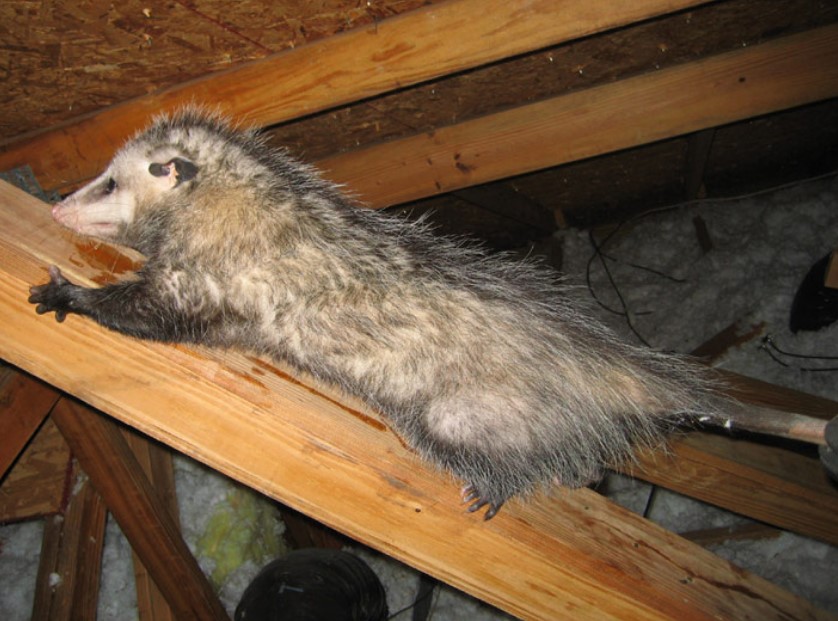
Knowing the early signs of a possum infestation allows you to act before the problem becomes more serious. Here’s how to tell if a possum has taken up residence in your roof and when it’s time to call a licensed professional.
1. Scratching, Thumping or Running Noises at Night
One of the first and most obvious signs of a possum living in your roof is unusual noises after sunset.
Possums are nocturnal animals, meaning they’re most active during the evening and throughout the night. Unlike rodents, possums are relatively large animals, so their movements are much heavier.
You may hear:
- Loud scratching above the ceiling
- Heavy footsteps or running sounds
- Thumping or jumping across roof beams
- Growling, hissing or screeching during breeding season
- Movement inside wall cavities
Many homeowners initially mistake these sounds for rats, but possums are significantly larger and generally make much louder, heavier noises.
2. Droppings Around the Roof Space
Possum droppings are another common indicator that one or more possums have made themselves at home.
You may notice droppings:
- In your roof cavity
- Around ceiling access points
- Near entry holes
- On insulation
- Around outdoor areas beneath roof access points
Besides being unpleasant, accumulated droppings can attract insects, create hygiene concerns, and contribute to unpleasant odours if left untreated.
3. Strong, Musty Odours
If your ceiling or roof space has developed a persistent unpleasant smell, a possum could be the cause.
The odour usually comes from:
- Urine accumulation
- Droppings
- Nesting materials
- Food scraps carried into the roof
Over time, these smells can seep through ceiling plaster and become noticeable inside living areas.
If the smell suddenly becomes much stronger, it may indicate an injured or deceased animal requiring immediate attention.
4. Damaged Insulation
Roof insulation provides a warm, sheltered environment that possums find attractive.
As they move around your roof, possums often:
- Flatten insulation
- Tear insulation apart for nesting
- Leave urine and droppings throughout the insulation
- Reduce its effectiveness
Damaged insulation can reduce your home’s energy efficiency, resulting in higher heating and cooling costs while also requiring replacement after the possum has been removed.
5. Visible Entry Points Around Your Roof
Possums are excellent climbers and can squeeze through surprisingly small openings.
Common access points include:
- Broken roof tiles
- Gaps beneath eaves
- Loose flashing
- Damaged vents
- Openings around chimneys
- Gaps where roofing materials have deteriorated
You may even notice greasy marks or worn areas where possums regularly enter and exit your roof.
6. Nocturnal Activity Around Your Property
If you regularly spot possums climbing across your roof, fences or nearby trees after dark, your home may already be providing shelter.
Watch for:
- Possums entering the roof shortly after sunset
- Animals climbing power lines or tree branches toward your roof
- Repeated movement in the same location each evening
This consistent behaviour often points to an established nesting site inside your roof cavity.
Why Possums Choose Roof Spaces
Modern homes provide many of the same benefits as hollow trees, which are the possum’s natural habitat.
Roof cavities offer:
- Protection from predators
- Warm, dry shelter
- Quiet nesting areas
- Safe places to raise young
As Melbourne’s urban development continues to reduce natural tree hollows, more possums seek alternative shelter inside residential properties.
Why You Shouldn’t Remove a Possum Yourself
Although it may be tempting to block entry holes immediately, doing so can actually make the situation worse.
If a possum is trapped inside your roof:
- It may panic and cause additional damage.
- A mother may become separated from her young.
- The animal may die inside the roof cavity, creating significant odours and hygiene issues.
In Victoria, possums are protected wildlife and must be managed humanely in accordance with state regulations. Relocating a brushtail possum off the property is generally prohibited.
When Should You Call a Professional?
It’s best to contact a licensed possum removal specialist as soon as you notice any combination of these warning signs:
- Persistent scratching or running noises
- Visible possums entering your roof
- Droppings or urine contamination
- Strong odours
- Damaged roof insulation
- Obvious roof entry points
A professional can identify how the possums are entering your roof, safely encourage them to leave using humane methods, and permanently proof your roof to help prevent them from returning.
At Paul the Possum Catcher, we use a proven one-way door system that allows possums to leave safely while preventing them from re-entering. Once the roof space is confirmed clear, all accessible entry points are professionally sealed to provide long-term protection. The service includes comprehensive roof proofing backed by a 12-month warranty.
Final Thoughts
A possum in roof Melbourne homes is a common problem, but it shouldn’t be ignored. The earlier you recognise the signs—whether it’s scratching noises, droppings, unpleasant smells, damaged insulation or regular nocturnal activity—the easier it is to resolve the issue before significant damage occurs.